
2021 2nd International Conference on Electrical Technology and Automatic Control (ICETAC 2021)
Speakers

Prof. Yuanchang Zhong
Chongqing University, China
Research Area:
Electronic Technology, Electronic Measurement Technology , System Engineering etc.
Introduction:
Dr. Yuanchang Zhong, professor and doctoral supervisor. He has served as deputy director of "Electronic Technology Basic Teaching Experimental Center of Chongqing University", deputy director of "Institute of Space Electronic Information Technology of Chongqing University", lecturer of "National Electrical and Electronic Technology Teaching Team of Chongqing University", "Vehicle Measurement and Control and Remote Sensing Information Transmission", national key discipline construction base of "211 Project", "Research Center for Multi-objective Measurement and Control and High-precision Measurement and Control" of Chongqing University, and academician Yang Shizhong of Chongqing University. Social and academic part-time: Vice Chairman of China Emergency Communication Industry Alliance Aerial Platform Working Group, Vice Chairman of Chongqing Industrial Internet Industry Technology Innovation Strategic Alliance, Member of Public Safety Standards Committee of China Emergency Society, Expert Member of Chongqing Internet of Things Association, Educational Information Expert of Chongqing Education Commission, Editorial Board of Telecommunications Technology, Senior Member of Electronics Society, Communication Society, Instrumentation Society, Electrotechnical Society and Energy Society.
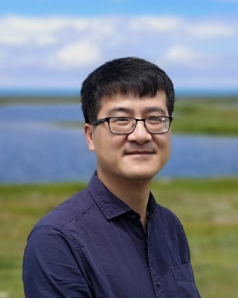
Prof. Qinmin Yang
Zhejiang University, China
Research Area:
Industrial AI, renewable energy and energy internet, intelligent control
Speech Title:Theoretical research and practice in intelligent control design for wind energy
Abstract:
Wind energy has been considered to be a promising alternative to current fossil-based energies. Large-scale wind turbines have been widely deployed to substantiate the renewable energy strategy of various countries. In this talk, challenges faced by control community for high reliable and efficient exploitation of wind energy are discussed. Advanced controllers are designed to (partially) overcome problems, such as uncertainty, intermittence, and intense dynamics. Theoretical results and attempts for practice are both present.
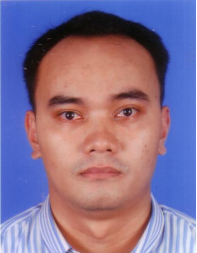
Prof. Badrul Hisham Ahmad
Universiti Teknikal Malaysia Melaka
Research Area:
Passive and active filters, SIW resonators, Antenna and Switches
Speech Title:Switchable Absorptive Bandstop to Bandpass Filter using Parallel-coupled Resonator
Abstract:
New developments in the design of the switchable microwave filters in some cognitive radio system are essential to meet the ever increasing demands to discriminate between wanted and unwanted signals. There also has a demand for miniaturization of microwave communications systems. A compact design can be achieved through the implementation of planar microstrip technology. Conventional electronically tunable bandstop filters suffer performance degradation due to the finite unloaded Q of the resonators and also the loss associated with the switching elements. In 2005, a new filter topology using lossy resonators has been introduced where the topology can be used to partially compensate for the loss. The lossy Allpass network demonstrates the concept and design of absorptive bandstop response with a perfectly matched at all frequencies. The filter is based on the half-wavelength λ/2 resonator with gap coupling, parallel with an Allpass nominally-90°-phase-shift element, which can be optimized to achieve a high Q-factor. A frequency agile bandstop filter based on this topology has been developed, but such filters as well as conventional switchable bandstop filters encounter performance degradation in terms of tuning bandwidth and stopband bandwidth due to the frequency dependant losses and couplings. Through this sharing, the switchable microwave filter is investigated and developed, where this filter is able to switch from absorptive bandstop (ON state) to bandpass (OFF state) response. This switchable filter is designed using parallel coupled resonator. The parallel coupled resonator consisted of two low-Q lossy resonator connected with 90° wavelength and with correct kinverter factor to produce an absorptive bandstop response. The filters are integrated with PIN diode to change the filter response. The absorptive bandstop filter operates at 2.4 GHz where S11 is below than 15 dB and S21 has high selectivity with the narrow bandstop response. For a bandpass response, it depends on the filter structure itself.

Prof. He Yan
Chongqing University of Technology, China
Research Area:
Digital Image Processing etc.
Speech Title: Research on Key Technologies of Semantic SLAM for Mobile Robot in Dynamic Scene
Abstract:
In the dynamic scene, the application of mobile robot has expanded from simple known environment to completely unknown working environment. However, if mobile robot wants to complete intelligent tasks in unknown environment, it must complete autonomous positioning and perception of environmental information. Simultaneous Localization and Mapping (SLAM) algorithm uses scene information and mileage information collected by visual sensors to locate the robot's current position and create an environment map, which is the key to realize autonomous navigation of mobile robot. The RGB-D camera, also known as the depth camera, can directly obtain the depth information of each pixel in the image by using structured light or Time-of-Flight(ToF), that is, the three-dimensional coordinate information of each point of the detected object. The visual SLAM scheme with RGB-D camera as the sensor can simultaneously obtain color images and depth images through RGB-D camera, which is generally suitable for static scenes where objects do not move, while dynamic scenes have many kinds of randomly moving objects.